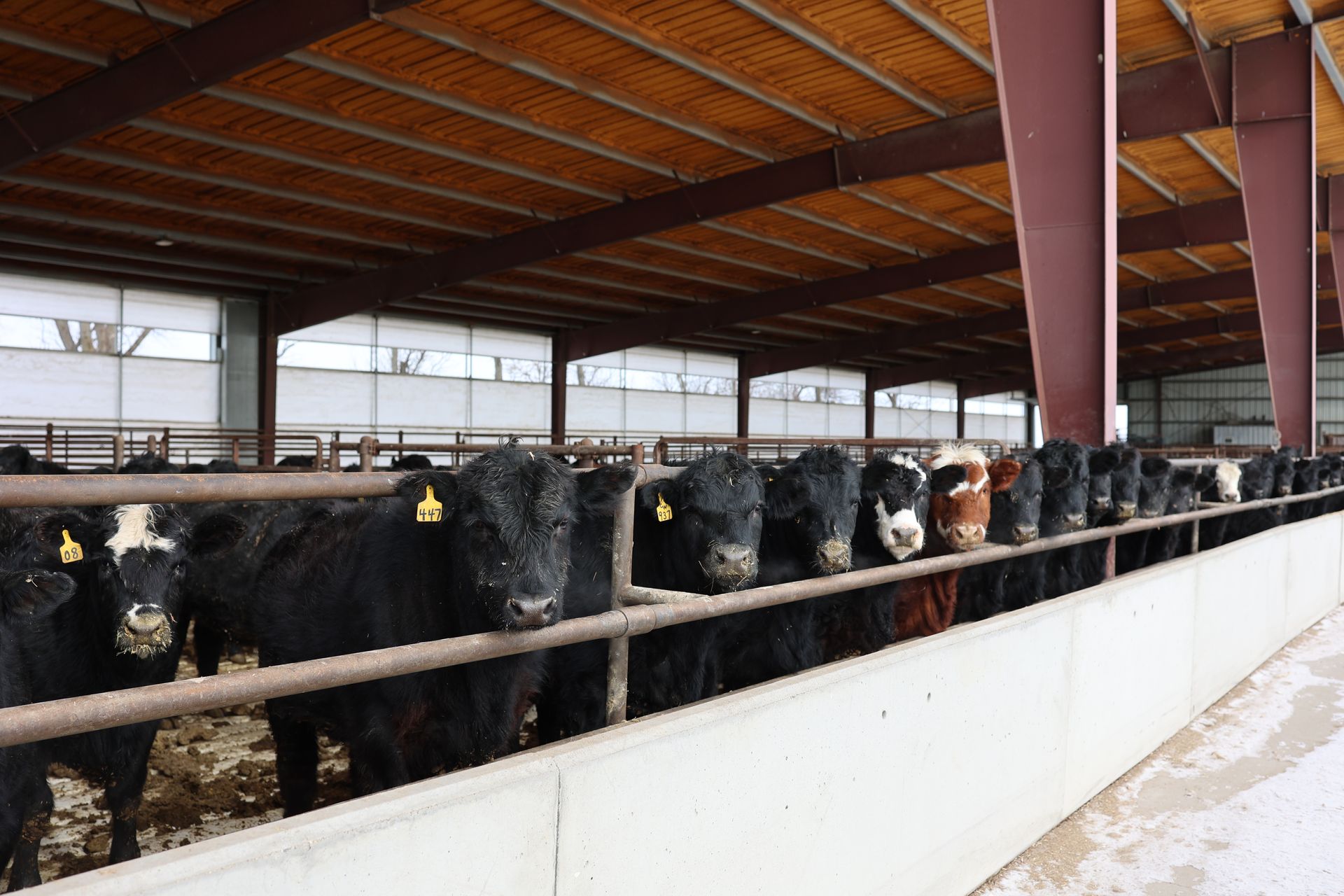
Feedlot Trials for Beef Cattle Operations in Worthington, MN

Profectus Livestock Solutions • November 9, 2026

Share this article

Feedlot Trials for Beef Cattle Operations in Worthington, MN

Feedlot trial programs in Worthington, MN give beef cattle producers a structured way to evaluate feed products and management changes before committing to full-scale adoption across an operation.

How Do Feedlot Trials Help You Make Better Feed Decisions?

Feedlot trials let you compare feed products or protocols side by side under real farm conditions, so your decisions are based on data from your own herd rather than general claims.

When you run a feedlot trial, you get measurable results tied to your specific cattle, your feed inputs, and your management style. That kind of on-farm evidence is far more reliable than relying solely on product literature or industry averages. Small differences in feed efficiency or average daily gain can translate into meaningful cost differences across a full feeding season.

Producers near Worthington, MN who are looking for ways to explore feedlot trial options in Worthington, MN can work with a team that designs programs around the goals of each individual operation. Whether you are evaluating a new additive or comparing ration formulations, a structured trial removes guesswork from the process.

What Goes Into a Well-Designed Feedlot Trial Program?

A sound feedlot trial requires consistent animal grouping, clear measurement protocols, and defined endpoints so results are meaningful and repeatable.

Animal selection matters more than most producers expect. Groups need to be as uniform as possible in weight, age, and health status so that differences in outcome can be attributed to the variable being tested rather than animal variation. Without that baseline consistency, trial data becomes difficult to interpret.

Measurement frequency and the metrics you track also shape how useful the results are. Average daily gain, feed conversion ratio, and final body weight are common endpoints, but health events and feed intake patterns add important context. A well-run trial captures all of these so you finish with a complete picture rather than a single number.

Can Feedlot Trials Work Alongside Nutrition Services?

Yes, pairing feedlot trials with professional nutrition support helps you design better protocols and interpret results with more confidence once the trial is complete.

Veterinarians and nutritionists bring a layer of expertise that strengthens both the design and the analysis phases of a trial. They can help you identify which variables are worth testing given your current ration, flag potential confounding factors early, and translate raw data into actionable ration adjustments. That collaboration shortens the gap between running a trial and actually improving your operation.

Producers who want to understand what nutrition services for beef cattle in Worthington, MN typically involve will find that the two programs complement each other naturally. A trial without nutritional context can leave you with data but no clear path forward, while nutrition guidance without on-farm trial data relies more heavily on assumptions.

How Southern Minnesota Weather Shapes Feedlot Trial Timing

Seasonal temperature swings in southern Minnesota affect cattle intake and stress levels, which means trial timing directly influences the reliability of your results.

Summer heat in the Worthington, MN area can suppress dry matter intake and increase water consumption, which skews feed conversion data if you do not account for it. Running a trial during a period of stable, moderate temperatures gives you cleaner data that is easier to apply to future feeding decisions. Winter cold stress adds a different layer of energy demand that can mask the effect of a feed additive you are trying to evaluate.

Planning your trial window around these seasonal patterns is not just a logistical detail — it is a data quality decision. A trial conducted during a heat event or a sudden cold snap may produce results that do not reflect how a product performs under normal conditions, leading to conclusions that do not hold up when you scale the change across your full operation.

Feedlot trials give your beef cattle operation a foundation of real evidence rather than assumptions. Working with a team that understands both the science and the practical realities of southern Minnesota farming makes that evidence more actionable.

Schedule a conversation with Profectus Livestock Solutions to learn how a feedlot trial program can be structured around your specific operation in Worthington, MN.

Recent Posts

By Dr. Steve Dudley, DVM • September 9, 2026
Clostridium perfringens Type A in Beef Calves
By Brian Dorcey, DVM — Profectus Livestock Solutions • September 9, 2026
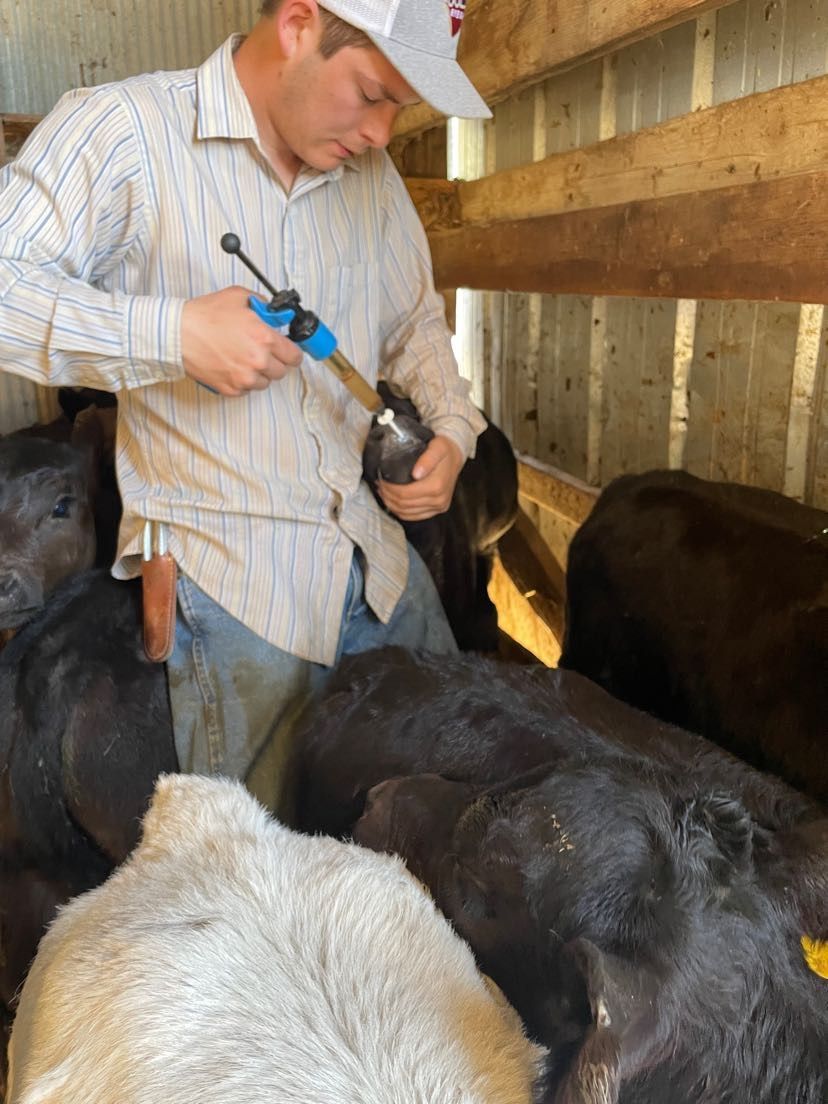
Respiratory pathogens enter through the nose, so it makes sense to put the vaccine there as well. An intranasal IBR-BRSV-PI3 product builds immunity directly on the lining of the nose and upper airway — the first place those organisms land. There are two good reasons to keep one in your program. The first is that they work in young calves. Antibodies a calf picks up from colostrum will tie up most of an injectable modified-live vaccine before it has a chance to do its job. Intranasal products largely get around that, so even a day-old calf will respond to one. The second reason is speed. You get a local immune response within a few days rather than several weeks, which is exactly what you want when calves are stressed and facing heavy exposure. That's why they fit well at birth or at branding, at arrival processing on light, high-risk calves, ahead of shipping or commingling, and during an active outbreak when you need protection working now. High-risk cattle at arrival This is where an intranasal earns its keep in a yard. On light, auction-sourced, commingled calves, you usually have no idea what they've had, when they had it, or how much protection is left. Some are still carrying maternal antibody, some aren't, and you can't sort them at the chute. An intranasal works either way, which takes the guesswork out of that first processing. The timing lines up too. Those calves are typically already incubating something by the time they come off the truck, and they'll break in the first week or two. A vaccine that starts working in days rather than weeks is worth a great deal in that window. Where they stop What they will not do is cover a calf for the whole year. Duration of immunity is short — plan on a few months. Think of an intranasal as a bridge that carries a calf to weaning, preconditioning, or revaccination in good shape, then let an injectable modified-live build the lasting protection from there. You're layering the two, not trading one for the other. That's really the protocol question: not whether to use one, but where it sits on the calendar. Build backward from weaning and let the intranasal cover the early gap. One reminder on handling — these are live products, so keep them cold, mix only what you'll use within the hour, and make sure the full dose stays in the nostril.  Give us a call and we'll work it into your protocol.