
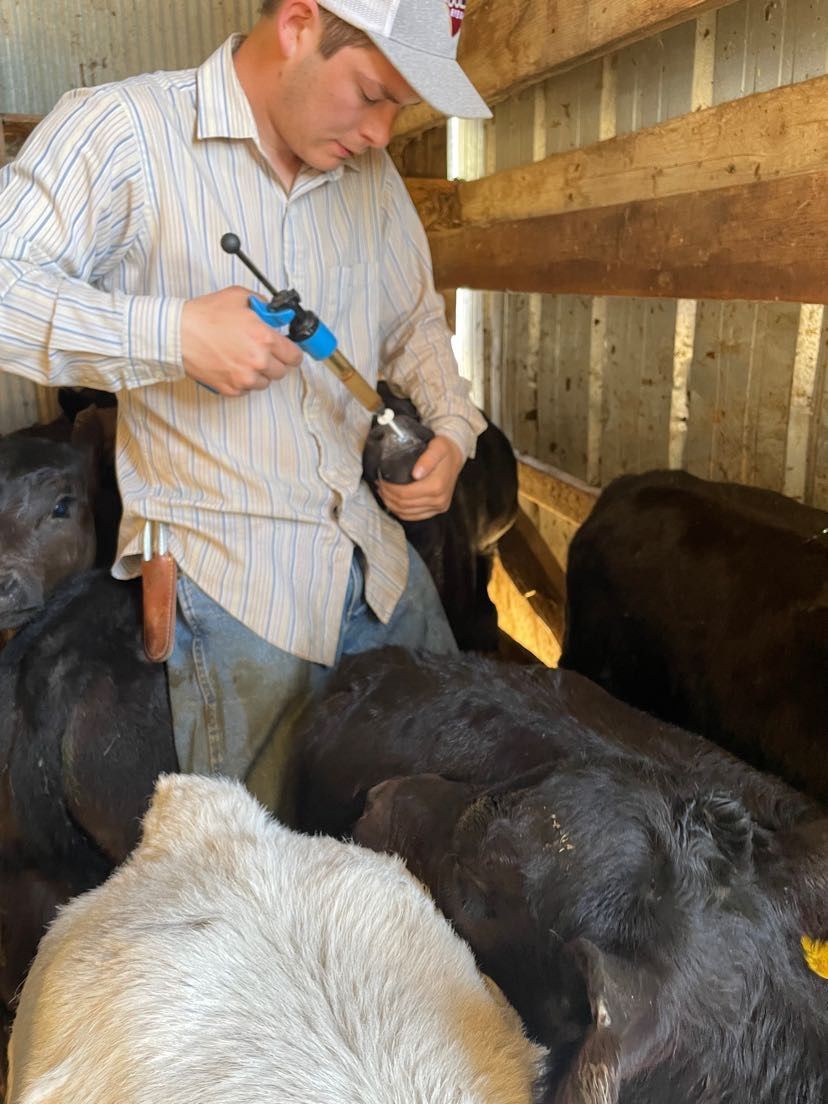
Respiratory pathogens enter through the nose, so it makes sense to put the vaccine there as well. An intranasal IBR-BRSV-PI3 product builds immunity directly on the lining of the nose and upper airway — the first place those organisms land. There are two good reasons to keep one in your program. The first is that they work in young calves. Antibodies a calf picks up from colostrum will tie up most of an injectable modified-live vaccine before it has a chance to do its job. Intranasal products largely get around that, so even a day-old calf will respond to one. The second reason is speed. You get a local immune response within a few days rather than several weeks, which is exactly what you want when calves are stressed and facing heavy exposure. That's why they fit well at birth or at branding, at arrival processing on light, high-risk calves, ahead of shipping or commingling, and during an active outbreak when you need protection working now. High-risk cattle at arrival This is where an intranasal earns its keep in a yard. On light, auction-sourced, commingled calves, you usually have no idea what they've had, when they had it, or how much protection is left. Some are still carrying maternal antibody, some aren't, and you can't sort them at the chute. An intranasal works either way, which takes the guesswork out of that first processing. The timing lines up too. Those calves are typically already incubating something by the time they come off the truck, and they'll break in the first week or two. A vaccine that starts working in days rather than weeks is worth a great deal in that window. Where they stop What they will not do is cover a calf for the whole year. Duration of immunity is short — plan on a few months. Think of an intranasal as a bridge that carries a calf to weaning, preconditioning, or revaccination in good shape, then let an injectable modified-live build the lasting protection from there. You're layering the two, not trading one for the other. That's really the protocol question: not whether to use one, but where it sits on the calendar. Build backward from weaning and let the intranasal cover the early gap. One reminder on handling — these are live products, so keep them cold, mix only what you'll use within the hour, and make sure the full dose stays in the nostril. Give us a call and we'll work it into your protocol.